The Real Cost of Employee Turnover: A Business Guide
By Rawan Osama ~ {{ PublishDate | datetime:'fullDate'}}
employee turnover costs employee retention strategies cost of replacing an employee HR software HR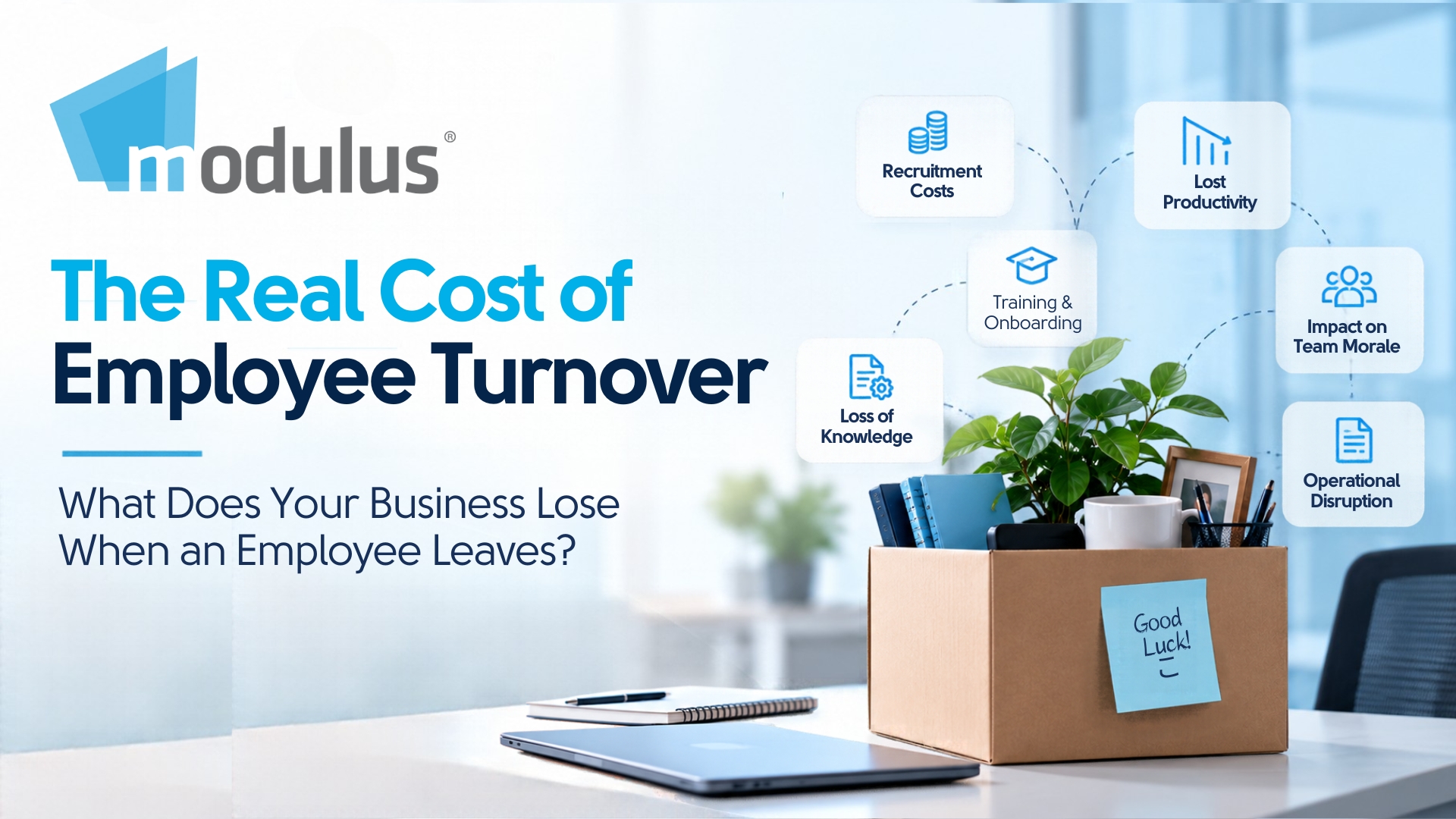
The Real Cost of Employee Turnover: What Does Your Business Lose When an Employee Leaves?
Employee turnover is often treated as a routine part of running a business. An employee resigns, HR starts recruiting a replacement, and the company moves forward.
But the real cost of employee turnover goes far beyond recruitment.
When an employee leaves, businesses may face recruitment expenses, training costs, lost productivity, additional workloads for existing employees, and the loss of valuable experience. These costs can add up quickly, especially when turnover happens frequently.
Understanding the true cost of employee turnover helps businesses make better workforce decisions, improve employee retention, and build more sustainable teams.
1. Recruitment and Hiring Expenses
Replacing an employee requires time and resources.
HR teams may need to write job descriptions, publish vacancies, review applications, conduct interviews, coordinate with hiring managers, and evaluate candidates before making an offer.
Depending on the role, companies may also work with recruitment agencies or pay for job advertisements.
When employee turnover becomes frequent, recruitment shifts from an occasional activity to a recurring operational expense.
What businesses should consider:
Recruitment advertising and agency fees.
HR and hiring managers' time spent interviewing candidates.
Administrative costs associated with onboarding.
Delays in filling critical positions.
2. Training and Onboarding Costs
A new employee rarely becomes fully productive on the first day.
They need time to understand company policies, learn internal processes, become familiar with their responsibilities, and develop the skills required for their role.
During this period, managers and experienced colleagues may need to provide additional guidance and support.
The organization therefore invests resources in preparing a new employee to perform a job that someone else may have already mastered.
When employees leave shortly after joining, some of that investment may never deliver its expected return.
3. Lost Productivity During the Transition
One of the most overlooked costs of employee turnover is lost productivity.
When an employee leaves, their responsibilities may remain unfinished until a replacement is hired and trained. Existing team members may need to take on additional tasks, while managers spend time redistributing workloads and explaining processes.
Even after a replacement joins, productivity may take time to recover.
The impact can be particularly significant in roles that require specialized knowledge, established customer relationships, or familiarity with complex internal processes.
The business impact may include:
Delayed projects and deliverables.
Slower customer service.
Increased workloads for remaining employees.
Temporary declines in team performance.
4. Loss of Knowledge and Experience
Employees develop knowledge that is not always documented in manuals or procedures.
They understand customer expectations, supplier relationships, internal workflows, recurring challenges, and the practical details of getting work done.
When an employee leaves, some of this knowledge may leave with them.
If the company does not maintain organized employee records, documented processes, and clear handover procedures, replacing that knowledge can become even more difficult.
This is why knowledge management and standardized workflows are important for business continuity.
5. The Hidden Impact on Employee Morale
Frequent turnover can affect the employees who remain.
When team members repeatedly lose colleagues, they may face heavier workloads, uncertainty about responsibilities, and concerns about their own future within the organization.
Over time, these pressures may contribute to lower engagement and additional resignations.
This can create a cycle in which turnover increases the pressure on the remaining team, potentially making retention even more challenging.
For HR managers, understanding employee feedback, monitoring workforce trends, and identifying recurring workplace issues can help reveal potential risks before they escalate.
6. Administrative and Operational Disruption
An employee's departure also creates administrative work.
Depending on the organization's procedures and local legal requirements, HR and other departments may need to manage:
Employee records and offboarding documentation.
Final payroll calculations and outstanding entitlements.
Leave balances and attendance records.
Access permissions and company property.
Task handovers and reassignment of responsibilities.
Recruitment and onboarding records for the replacement.
When these activities are handled across disconnected spreadsheets and systems, the process can become more time-consuming and more prone to errors.
Organized employee records and connected HR and payroll processes can help businesses manage transitions more consistently.
7. How Can Businesses Calculate the Cost of Employee Turnover?
There is no single turnover cost that applies to every employee. The total depends on the role, salary, recruitment requirements, training period, and the impact of the vacancy on the business.
A practical starting point is to calculate the direct and indirect costs associated with each departure.
Employee turnover cost formula:
Total turnover cost = Recruitment costs + Training and onboarding costs + Productivity losses + Administrative costs + Other measurable replacement costs.
For example, consider a hypothetical employee replacement:
| Cost category | Illustrative cost |
|---|---|
| Recruitment and hiring | EGP 8,000 |
| Training and onboarding | EGP 6,000 |
| Productivity loss | EGP 12,000 |
| Administrative and handover costs | EGP 2,000 |
| Estimated total | EGP 28,000 |
These figures are illustrative, not industry benchmarks. Actual costs will vary by business and role. Productivity losses should be estimated carefully to avoid counting the same cost twice.
If a company replaces several employees during the year, the cumulative cost can become substantial.
For a more useful analysis, businesses should calculate turnover costs by department or role and compare them over time.
8. How HR Teams Can Reduce Employee Turnover Costs
Reducing turnover does not mean preventing every resignation. Employees may leave for personal, professional, or organizational reasons.
The goal is to understand avoidable turnover, improve the employee experience, and make workforce planning more effective.
Here are five practical steps:
1. Track employee turnover regularly
Monitor turnover rates by department, role, and period. Look for patterns instead of relying on annual totals alone.
2. Identify recurring reasons for resignation
Use exit interviews, employee feedback, and manager discussions to understand whether workload, management practices, compensation, or limited career development may be contributing factors.
3. Improve onboarding and training
Provide new employees with clear responsibilities, documented procedures, and structured support during their first months.
4. Monitor attendance and workload patterns
Attendance, overtime, leave, and other workforce indicators can help HR teams identify operational pressures. These indicators do not prove that an employee will resign, but they can inform further investigation.
5. Organize HR information and processes
Maintain accurate employee records, streamline attendance and leave administration, and coordinate HR and payroll activities to reduce administrative friction.
9. How HR Software Can Help Businesses Manage Employee Turnover
HR software cannot eliminate employee turnover on its own. However, it can help HR teams organize workforce information and manage the processes surrounding employee retention and departures.
With an integrated HR system such as Modulus, businesses can manage relevant processes including employee records, attendance tracking, leave management, payroll, and performance evaluation, according to the modules available in their subscription.
Having organized workforce information can help HR teams spend less time on repetitive administration and more time analyzing employee needs, supporting managers, and improving workforce planning.
The key is to combine reliable HR data with meaningful conversations, effective management practices, and a clear employee development strategy.
Conclusion: Employee Turnover Is More Than an HR Metric
Every employee departure has a story, and potentially a financial impact that extends beyond the cost of hiring a replacement.
Recruitment, onboarding, lost productivity, knowledge transfer, and administrative work can all contribute to the total cost of employee turnover.
By measuring these costs, understanding why employees leave, and improving HR processes, businesses can make more informed decisions about their workforce.
Ready to make HR operations more organized and efficient?
Discover how Modulus can help your business manage employee records, attendance, leave, payroll, and performance processes in one integrated platform.
Book a Modulus demo to explore the right HR solution for your business.
https://modulus.biz/site/en/OrderDemo